

How to Draft Contracts: Essential Steps for Legal Professionals 2025
Learn how to draft contracts with clarity and precision. Step-by-step guidance for legal professionals to create watertight, enforceable agreements in 2025.
Drafting contracts might sound routine, but every missed detail can cost millions. Here is the shocker. Over 60 percent of contract disputes come down to unclear language or missing terms. Most lawyers worry about complex legal theory, yet the simplest mistakes are the ones sabotaging deals. Why are seasoned professionals falling into these avoidable traps?
Table of Contents
- Key Elements Every Contract Should Include
- Step-By-Step Guide To Drafting Contracts
- Common Mistakes And How To Avoid Them
- Leveraging Legal Tech For Contract Drafting
Quick Summary
| Takeaway | Explanation |
|---|---|
| Essential Contract Elements | Every legally binding contract must include six core components: offer, acceptance, awareness, consideration, capacity, and legality. These elements ensure clarity and enforceability. |
| Structured Drafting Process | A systematic approach encompasses initial preparation, structured documentation, and a thorough final review to create accurate and robust contracts. |
| Common Mistakes to Avoid | Legal professionals should be vigilant against vague language, critical omissions, and insufficient risk management to minimize legal vulnerabilities in contract drafting. |
| Leverage Legal Technology | Utilizing AI-powered tools can streamline contract drafting, enhance accuracy, and maintain compliance, allowing legal professionals to work more efficiently and effectively. |
| Tailor Contracts to Context | Each contract should be specifically tailored to the unique circumstances involved, ensuring that all terms are relevant and comprehensively defined for the parties involved. |
Key Elements Every Contract Should Include
Drafting a legally binding contract requires precision and understanding of critical components that establish its validity and enforceability. Legal professionals must meticulously incorporate specific elements to create robust agreements that protect all parties involved.
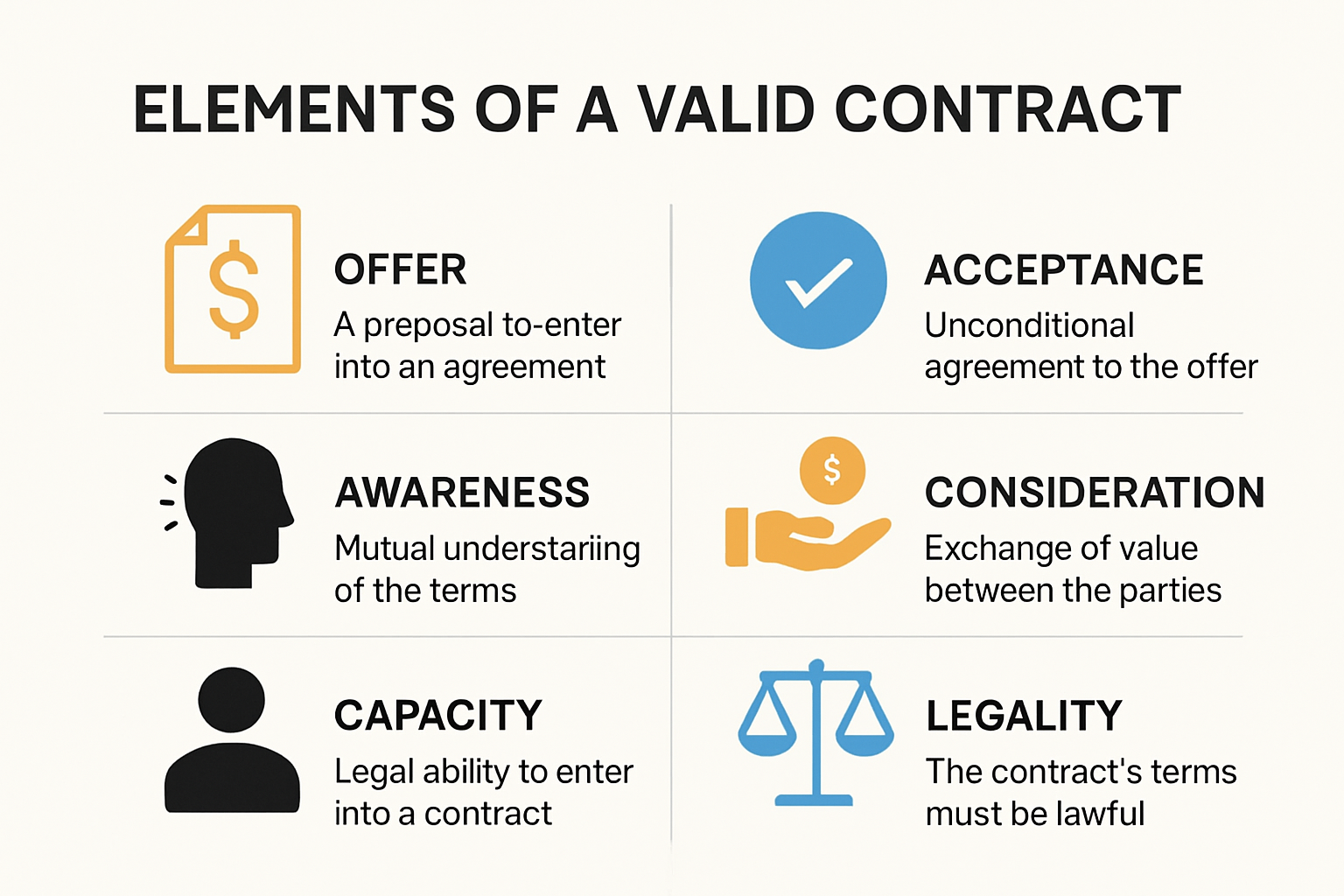
Fundamental Components of a Valid Contract
Every contract needs six essential elements to be considered legally binding. According to DocuSign, these critical components are offer, acceptance, awareness, consideration, capacity, and legality.
Offer represents a clear proposal from one party to another, detailing specific terms and conditions. This initial communication must be precise and unambiguous. The offer demonstrates the intent to enter a contractual relationship and sets the foundation for potential agreement.
Acceptance occurs when the receiving party agrees to the terms without modifications. It signifies mutual understanding and willingness to be bound by the contract’s conditions. Any counter-proposals or alterations can be considered a rejection of the original offer.
Detailed Contract Requirements
Research from George Washington University’s Procurement Guidelines highlights critical elements that ensure comprehensive contract documentation. A well-drafted contract must explicitly outline several key aspects:
- Party Identification: Clearly state the full legal names and contact information of all parties involved
- Responsibilities and Obligations: Precisely define each party’s specific duties, expectations, and performance standards
- Contract Duration: Specify exact start and end dates, including any provisions for extension or termination
- Payment Terms: Detail financial arrangements, including amounts, schedules, methods of payment, and potential penalties
Ensuring Legal Enforceability
To guarantee a contract’s legal standing, professionals must prioritize written documentation. Procurement experts emphasize that verbal agreements are inherently risky and challenging to enforce. Written contracts provide clear evidence of the agreed terms and protect all parties from potential misunderstandings.
Additionally, contracts must demonstrate legal capacity of all signatories. This means each party must be of legal age, mentally competent, and authorized to enter into binding agreements. Signatures from individuals without proper legal standing can invalidate the entire contract.
Legal professionals should also include signature lines for authorized representatives, ensuring formal acknowledgment and commitment from each party. These signatures represent a formal acceptance of the contract’s terms and create a legally binding document that can be referenced or enforced if disputes arise.
By meticulously incorporating these essential elements, lawyers can draft contracts that are comprehensive, clear, and legally sound. Attention to detail in contract preparation minimizes potential conflicts and provides a solid framework for successful business and professional relationships.
Step-by-Step Guide to Drafting Contracts
Contract drafting requires a systematic approach that transforms complex legal requirements into clear, enforceable documents. Legal professionals must follow a strategic methodology to ensure precision and minimize potential disputes.
Initial Preparation and Research
According to the Library of Congress legal resources, preparing for contract drafting begins with comprehensive research and understanding of the specific context. This involves gathering all relevant background information, identifying the parties involved, and determining the precise objectives of the agreement.
Key initial steps include:
- Collecting detailed information about all parties
- Understanding the specific transaction or relationship
- Reviewing any existing agreements or precedents
- Identifying potential legal risks and compliance requirements
Legal professionals should thoroughly investigate the subject matter, ensuring they have a comprehensive understanding of the transaction’s nuanced details. This preparatory work establishes a solid foundation for drafting an accurate and comprehensive contract.
To provide a concise view of the step-by-step drafting process, the following table summarizes the key stages and their main objectives.
| Step | Main Objective |
|---|---|
| Initial Preparation & Research | Gather information, identify parties & define goals |
| Structuring the Contract | Organize contract sections & clarify obligations |
| Final Review & Validation | Proofread, ensure compliance, and confirm accuracy |
Structuring the Contract Document

The American Bar Association emphasizes the critical importance of using clear and unambiguous language. Drafting a contract requires careful organization and strategic structuring to ensure clarity and legal enforceability.
A well-structured contract typically includes:
- Introductory Section: Identifying parties, defining key terms
- Substantive Provisions: Detailing rights, obligations, and specific terms
- Financial Terms: Outlining payment structures, compensation
- Dispute Resolution: Specifying mechanisms for addressing potential conflicts
- Termination Clauses: Defining conditions for contract conclusion
Learn more about advanced contract drafting techniques to streamline your legal documentation process.
Final Review and Validation
University of Minnesota’s Office of the General Counsel recommends a meticulous final review process. This critical stage involves multiple layers of verification to ensure the contract’s comprehensive protection of all parties’ interests.
Essential review steps include:
- Comprehensive proofreading for grammatical and technical accuracy
- Verifying legal compliance with relevant regulations
- Confirming all critical terms are precisely defined
- Ensuring consistency across all contract sections
- Obtaining necessary legal consultations or approvals
Professional contract drafting demands attention to detail, legal expertise, and a systematic approach. By following these structured steps, legal professionals can create robust, clear, and enforceable contracts that effectively protect their clients’ interests and minimize potential legal complications.
Common Mistakes and How to Avoid Them
Contract drafting demands precision and strategic foresight. Legal professionals frequently encounter pitfalls that can compromise the effectiveness and enforceability of their agreements. Understanding these common mistakes is crucial for creating robust and legally sound documents.
Language and Terminology Challenges
According to BARBRI legal resources, ambiguous language represents one of the most significant risks in contract development. Vague terms can create substantial legal vulnerabilities and potential disputes.
Common linguistic mistakes include:
- Using imprecise phrases like “reasonable efforts”
- Failing to define complex or industry-specific terminology
- Employing inconsistent terminology throughout the document
- Relying on colloquial language instead of precise legal terminology
To mitigate these risks, legal professionals should:
- Create a comprehensive definitions section
- Replace ambiguous terms with specific, measurable language
- Consistently use defined terms throughout the document
- Have multiple professionals review the contract’s language
Below is a checklist table summarizing common linguistic pitfalls and corresponding best practices for avoiding them.
| Linguistic Pitfall | Best Practice |
|---|---|
| Imprecise phrases (e.g., “reasonable efforts”) | Use specific and measurable terms |
| Undefined industry jargon | Define all technical terms in a definitions section |
| Inconsistent terminology | Standardize terminology throughout the document |
| Colloquial or informal language | Use formal and precise legal language |
Critical Omissions in Contract Terms
Legal experts emphasize the importance of comprehensive term specification. Incomplete or vague contract terms can create significant legal uncertainties.
Key areas prone to critical omissions include:
- Pricing and Payment: Precise financial terms and conditions
- Delivery Expectations: Specific timelines and performance metrics
- Termination Conditions: Clear exit strategies and consequences
- Dispute Resolution: Explicit mechanisms for addressing potential conflicts
Explore advanced contract drafting techniques to enhance your legal documentation precision.
Risk Management and Compliance
Effective contract drafting extends beyond language and terms. Legal professionals must anticipate potential risks and incorporate comprehensive protective mechanisms.
Risk management strategies include:
- Conducting thorough background research on all parties
- Including comprehensive indemnification clauses
- Specifying compliance requirements with relevant regulations
- Developing clear performance metrics and accountability mechanisms
- Establishing transparent reporting and monitoring processes
Successful contract drafting requires a holistic approach that balances legal precision with practical understanding. By systematically addressing potential vulnerabilities and maintaining clarity, legal professionals can create contracts that protect their clients’ interests and minimize potential future disputes.
Remember that each contract represents a unique legal instrument. While general principles apply, tailoring the document to specific contextual requirements remains paramount. Continuous learning, attention to detail, and a proactive approach to potential challenges will distinguish exceptional contract drafting.
Leveraging Legal Tech for Contract Drafting
The legal profession stands at a transformative crossroads where technological innovation is dramatically reshaping traditional contract drafting methodologies. Legal professionals must understand and strategically integrate emerging technologies to remain competitive and efficient in an increasingly digital landscape.
AI-Powered Contract Automation
According to Thomson Reuters legal research, AI-powered legal drafting tools are revolutionizing document creation processes. These advanced technologies can dramatically reduce the time legal professionals spend on routine drafting tasks by automating complex procedures.
Key capabilities of AI contract drafting technologies include:
- Automatic precedent document identification
- Ensuring consistency with established legal playbooks
- Detecting potential contract deviations
- Rapid template generation
- Intelligent clause recommendation
By leveraging machine learning algorithms, these tools analyze vast repositories of legal documents to provide nuanced, context-aware drafting assistance. This approach transforms manual contract creation into a streamlined, data-driven process.
Enhanced Accuracy and Compliance
Research from leading technology publications demonstrates that AI integration significantly enhances contract drafting accuracy. These technologies can analyze complex legal frameworks, ensuring rigorous compliance and minimizing human error.
Advanced AI systems offer sophisticated capabilities such as:
- Real-time legal compliance checking
- Automated risk assessment
- Comprehensive contract language analysis
- Instant cross-referencing with regulatory standards
Discover advanced AI contract drafting techniques to transform your legal workflow.
Future of Intelligent Contract Generation
Emerging research in retrieval-augmented generation highlights the potential of AI chatbots in legal documentation. These intelligent systems can generate contextually relevant legal responses, facilitating more precise and efficient contract creation.
The future of contract drafting lies in symbiotic collaboration between human expertise and technological innovation. Legal professionals who embrace these tools will gain significant competitive advantages, delivering faster, more accurate, and more comprehensive contract solutions.
Technology is not replacing legal professionals but empowering them to work smarter, focus on complex strategic tasks, and provide higher-value services to their clients. The key is to view these technological advances as collaborative tools that augment human intelligence rather than substitute it.
Frequently Asked Questions
What are the essential elements of a valid contract?
Every valid contract must include six core components: offer, acceptance, awareness, consideration, capacity, and legality. These elements are crucial for ensuring that the contract is legally binding and enforceable.
How should I structure a contract document?
A well-structured contract typically includes an introductory section identifying the parties involved, substantive provisions detailing rights and obligations, financial terms such as payment structures, dispute resolution mechanisms, and termination clauses to define conditions for ending the contract.
What common mistakes should I avoid when drafting contracts?
Common mistakes include using ambiguous language, omitting critical terms such as pricing and payment details, and failing to establish clear dispute resolution mechanisms. Avoiding these pitfalls can enhance the clarity and enforceability of the contract.
How can technology assist in contract drafting?
AI-powered contract automation tools can streamline the drafting process by automating routine tasks, ensuring consistency, detecting potential deviations, and enhancing accuracy. These tools help legal professionals work more efficiently while maintaining compliance.
Ready to Eliminate Contract Drafting Errors and Work Smarter?
Contract mistakes are costly. The article highlights how overlooked details and vague language frequently undermine deals and waste enormous chunks of lawyers’ time. If your firm struggles with manual drafting, missed terms, or compliance headaches, you know how overwhelming it feels to keep up with growing workloads and rising client expectations. What if there was a smarter way to create contracts that removes guesswork and risk?
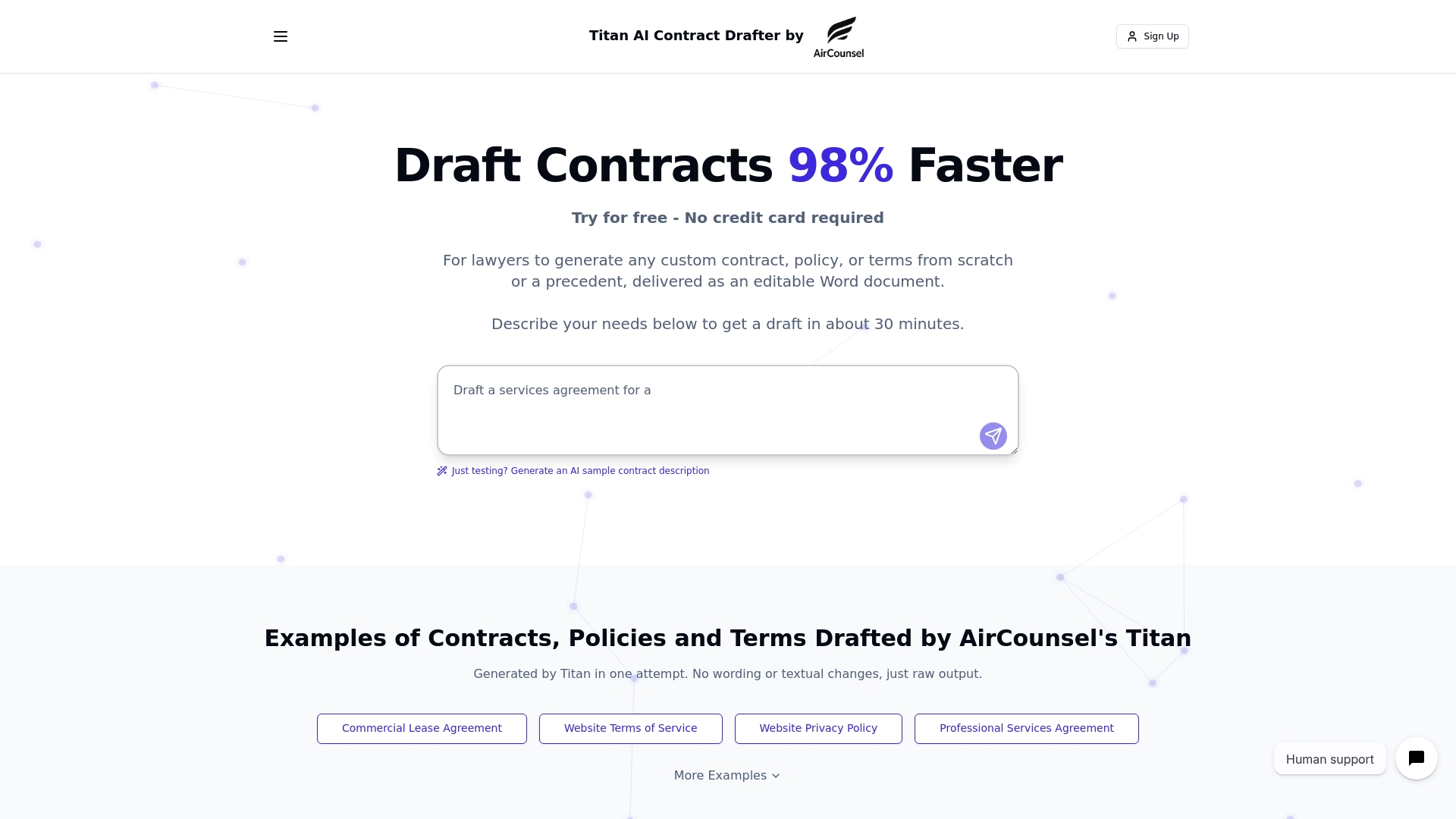
Join the legal professionals already speeding up their workflow with intelligent tools. Lawyers.AirCounsel.com delivers AI-powered contract drafting designed for your pain points. Instantly generate accurate documents. Customize templates to fit each complex case. Catch potential trouble spots before they cause disputes. Find out how you can draft contracts up to 98 percent faster and get peace of mind that nothing is left out. Visit our landing page and step into a new era of efficient, reliable legal work—right now.
Recommended
- FAQs - AirCounsel AI Contract Drafting Platform | AirCounsel for Lawyers
- AirCounsel for Lawyers - Draft Contracts 98% Faster with AI
- AirCounsel for Lawyers - Draft Contracts 98% Faster with AI
- AirCounsel for Lawyers - Draft Contracts 98% Faster with AI
- Pricing Plans - AirCounsel for Lawyers | AirCounsel for Lawyers
- About AirCounsel - Revolutionizing Legal Practice with AI | AirCounsel for Lawyers